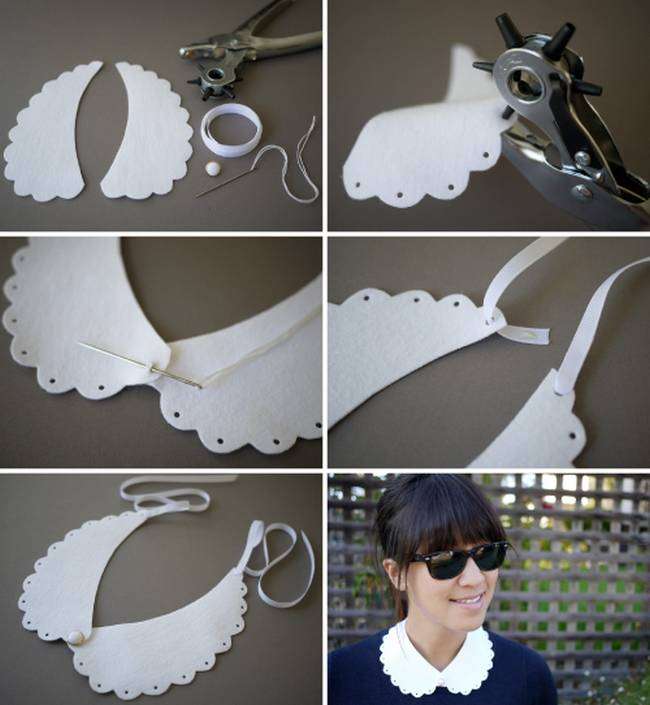
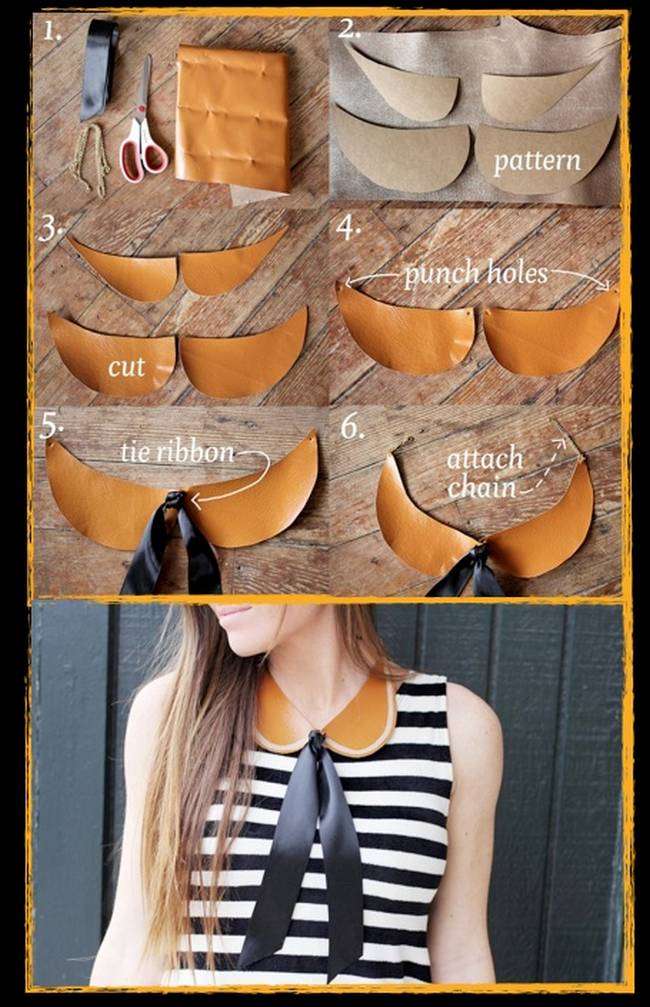
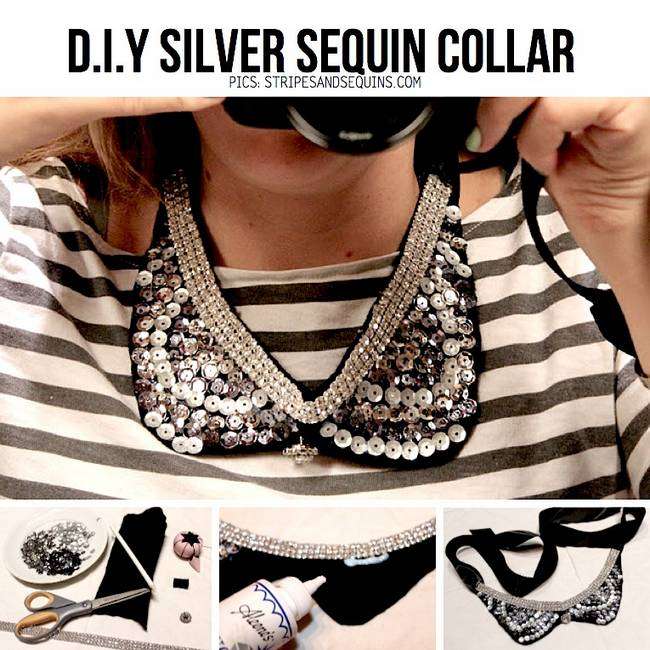
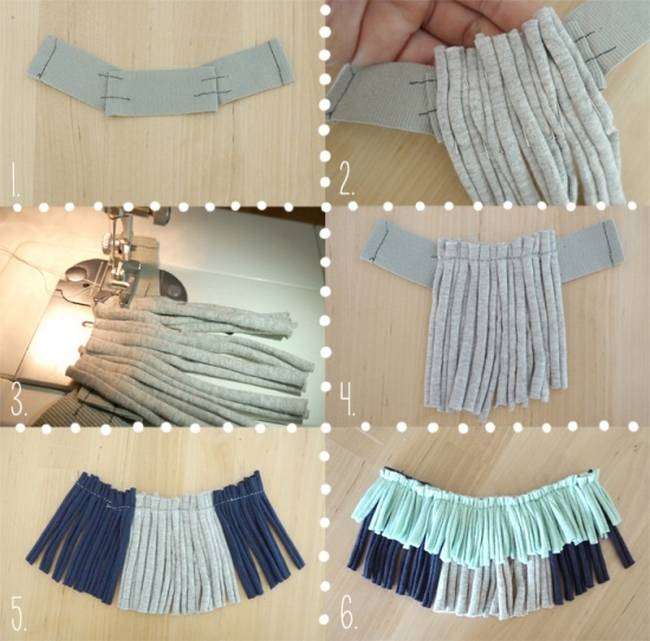
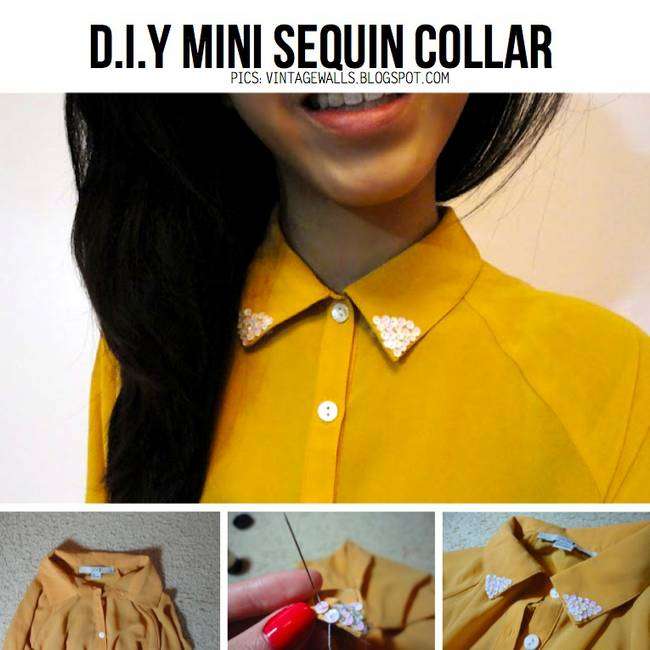
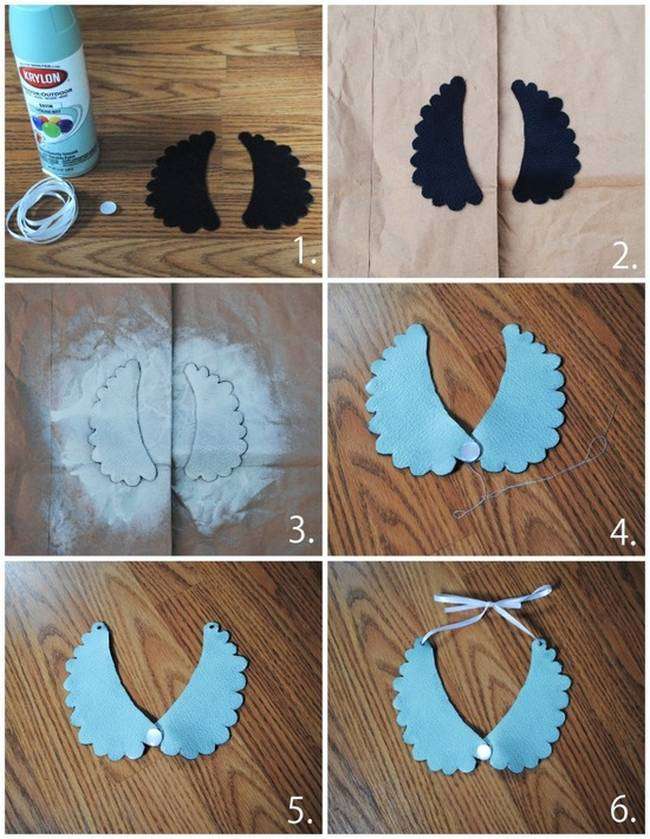
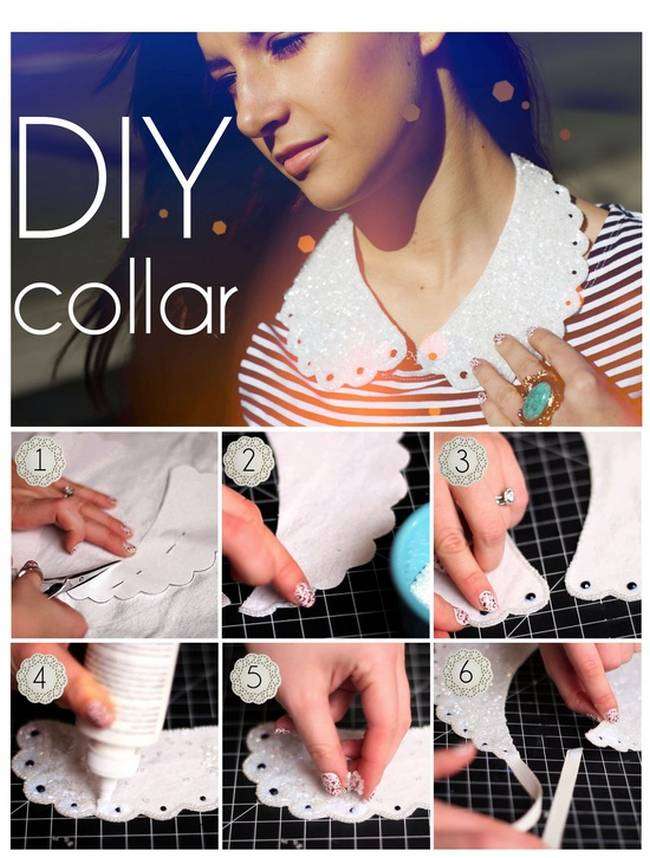
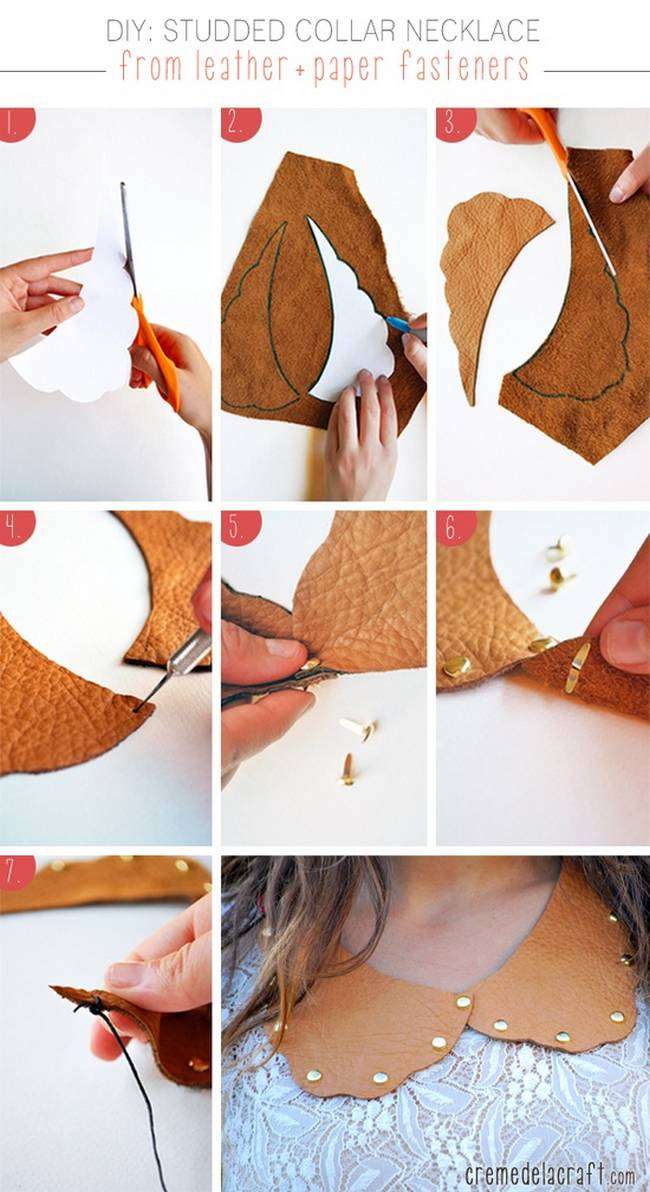
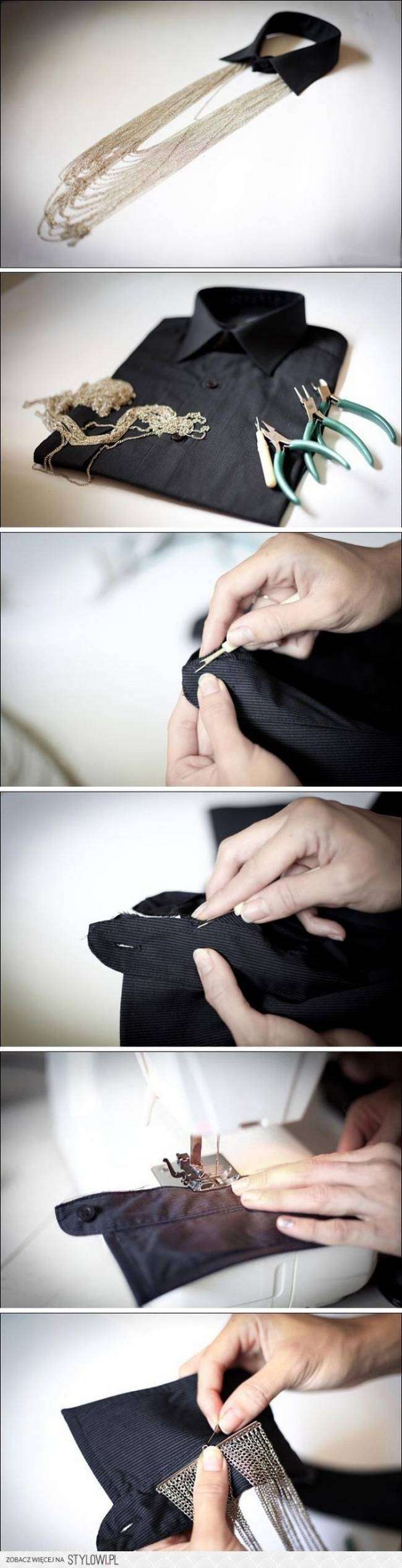
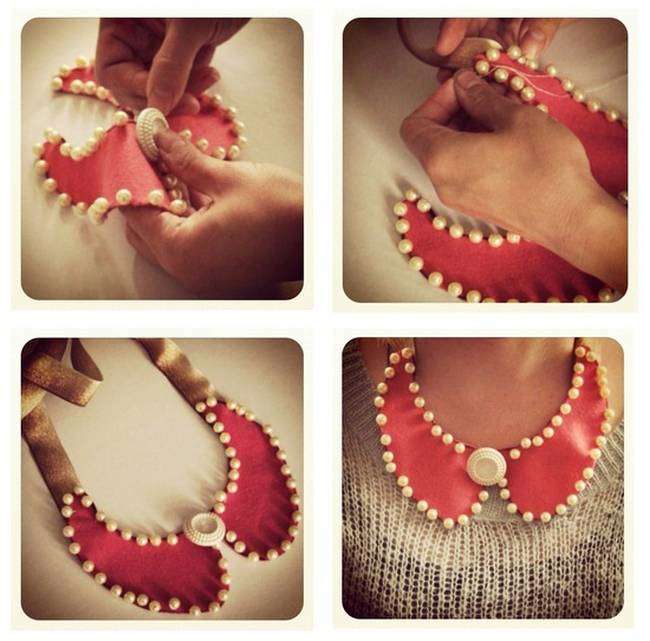
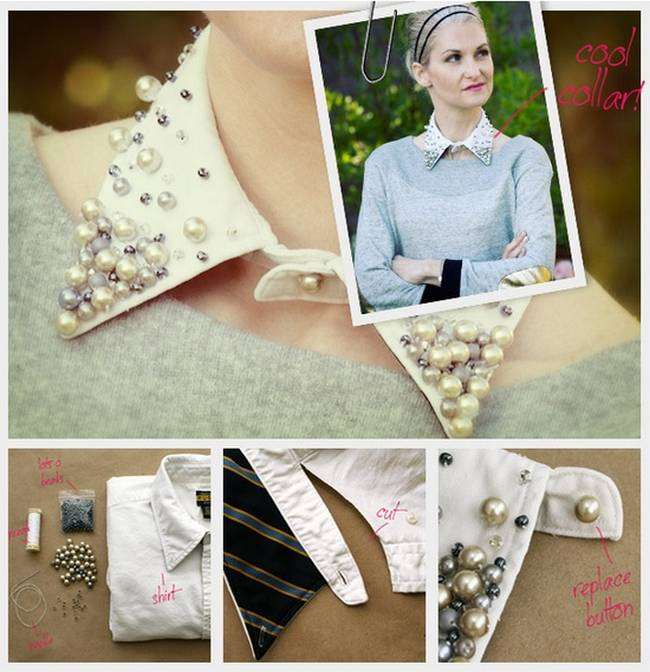
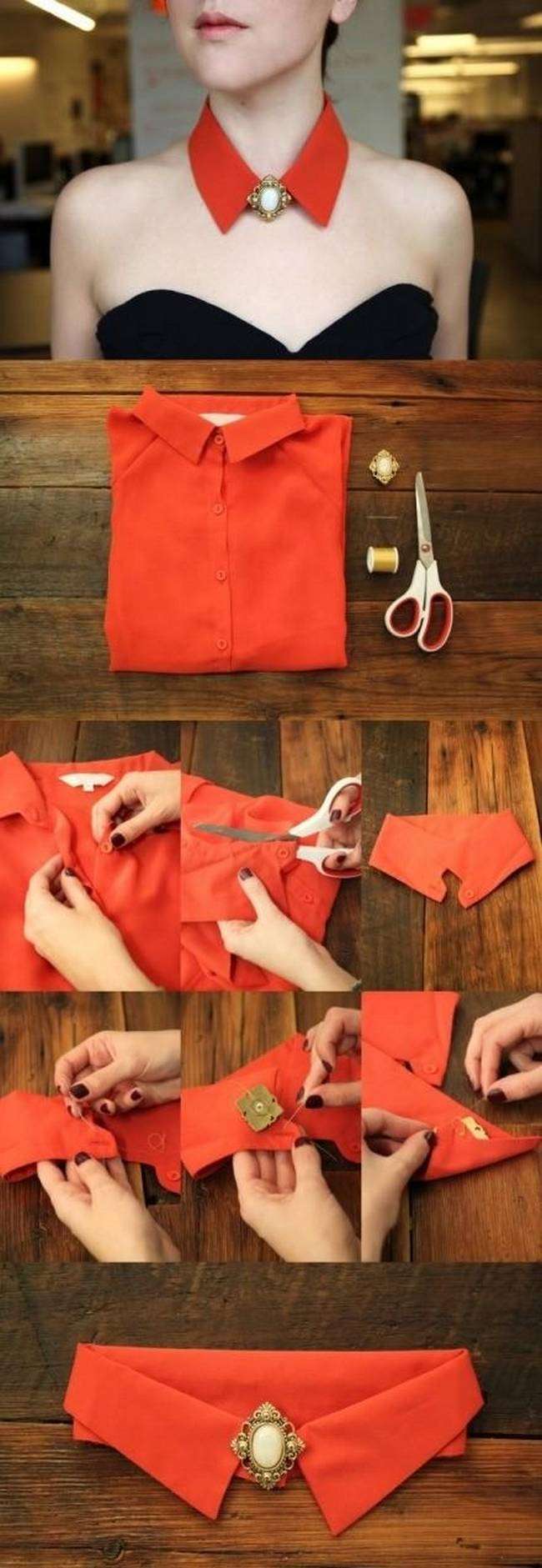
Somewhere between a Miu Miu runway and your grandmother’s sewing basket, the detachable collar found its way back. Over the last few seasons they’ve been impossible to miss — a crisp little collar pinned to a plain tee or a simple dress, and suddenly the whole thing looks dressed up and intentional. And honestly, I get the appeal. There’s something satisfying about a buttoned-up bit of bling at the throat that makes an ordinary outfit feel finished. But the designer versions will cost you more than a nice dinner, so why pay for it? We put our crafty skills to the test and made a whole bunch of our own. Click through for 20 girly DIY collar projects, and stick around for a few tips that’ll get your first one right.
Choose fabric that behaves
Pick something durable and kind to your skin — cotton, linen, denim, or a sturdy poplin. Skip the flimsy stuff that wrinkles into oblivion and the scratchy stuff that’ll leave your neck red. The fabric is also what gives the collar its shape, so a little body in the weave goes a long way. If you want it stiff and crisp, you can add interface; if you want soft and drapy, leave it alone.
Measure your neck before you cut
Take the actual measurement around the base of your neck — not a guess, not “the last time I made one.” A tape measure, snug but able to fit a finger underneath, tells you how long the collar needs to be. Get this wrong and your collar will either strangle you or flop open mid-outfit, and neither looks good.
Cut to a pattern, or make one
You can buy a collar pattern or draft your own on paper first — a plain collar is basically two identical shapes, so it’s not intimidating. Lay the pattern on your fabric, pin it, and cut. And always leave a seam allowance; cutting right on the line leaves nothing to sew into later, which is how collars fall apart at the first wear.
Sew the pieces together
Pin the two collar pieces with the good sides facing each other — the “right sides” are the ones you want to see on the outside. Stitch along the edges with a machine or by hand, but leave a small gap on one side. That gap is where you’ll reach in and flip it right side out later, so don’t sew it completely shut.
Trim, then turn
Before you flip it, snip the corners and trim any excess fabric. Corners are the part that looks lumpy if you leave them bulky, and trimming them lets the collar turn into a clean, sharp shape instead of a lumpy blob. Then reach through the gap and push it right side out.
Press like you mean it
This is the step beginners skip and regret. Press the seams flat with an iron once it’s turned — it’s what makes a homemade collar look bought instead of handmade. A crisp press is half the professional finish; skip it and even an expensive-looking collar will look homemade.
Attach it to the garment
Pin the collar to the neckline, lining up the center back of the collar with the center back of the garment. That little alignment is what keeps it from ending up crooked. Sew along the neckline so it’s secure, then go back and close the gap you left for turning.
Topstitch for the finish
For a clean edge and something that holds up to wear, topstitch around the collar about an eighth of an inch from the edge. It keeps the collar flat and in place, and it reads as a deliberate, finished detail rather than a raw seam.
Make it yours
This is where you get to play. Add buttons, trim, a little embroidery, or topstitching that matches your style. The plain collar is just a canvas — the details are what make it yours, so experiment until it feels like something you’d actually wear.
Try it on before you commit
Before you sew that final seam for good, put the garment on and see how the collar sits. Adjust if it’s tight, if it curls, or if it doesn’t lie flat. It’s a lot easier to fix a pin than to unpick a seam you’ve already set.
Embrace the first ugly one
Making collars is fiddly, especially if you’re new to sewing, and your first one probably won’t be your best. That’s normal, not a sign to quit. Practice, see what went wrong, and try again — the skill shows up in the second or third one, not the first.





Text by Connie Wang and Lisa Eppich